Hear any melody. Know every note.
A sight-singing and ear-training program at conservatorium level. Hear music and read it, note by note.
Early access is free.
Preview with a sample number
You’re in.
You are number 312. Free early access is yours.
- Done: Step 1: your spot is saved.
- Step 2: open the email with your number. It is on its way to your address.
Not there in a minute? Check Promotions or Spam.
Für Elise on @musilingual: the cursor reads the melody and every note is sung by its solfège name. Muted here; sound on TikTok.
The program teaches you to do this yourself: see the notes, hear them, sing them. Then any melody.
The one skill every musician needs.
-
Hear any music and know what it says.
A tune on the radio, a line in a choir: you hear the notes and you can name them. Then you can play them, write them down, or sing along in harmony.
-
Read music and hear it before you play.
Open a score and the melody sounds in your head, before your voice or your hands touch it. New pieces stop being puzzles.
-
Sing and play in tune, in time.
You know where the next note is before it comes, so you land on it. That confidence is the whole difference on stage.
Every spot on the list is free. Take yours.
A program, not a pile of drills.
Random intervals with a score teach you to guess. A program builds the skill in order, each stage resting on the last, the way the world’s best conservatoriums train musicians.
- StartBy ear, with songs you already know
- Reading and writing what you hear
- Every major key
- Ties, dotted rhythms and compound time
- Minor keys
- Chromatic notes
- Harmony: parts, bass lines, chords
- Letter names and transposition in any key
- Modulation
- Form, advanced rhythm, and music beyond major and minor
How every lesson goes
-
Hear it, sing it back. A short phrase plays. You sing it back by its note names, or play it on your instrument, and you hear straight away whether you landed.
-
See it, sing it at first sight. The same phrases engraved, as in the videos. Reading grows out of hearing, never the other way round.
-
Find do yourself. Nobody plays you the home note. You learn to hear where it is in any music, and from then on every note has a place.
Made by a conservatorium-trained musician.The same person behind the videos at @musilingual.
Two names for every note.
You learn both, and each does one job. Solfège tells you where a note sits in its key. Letter names tell you which note it is on your instrument.
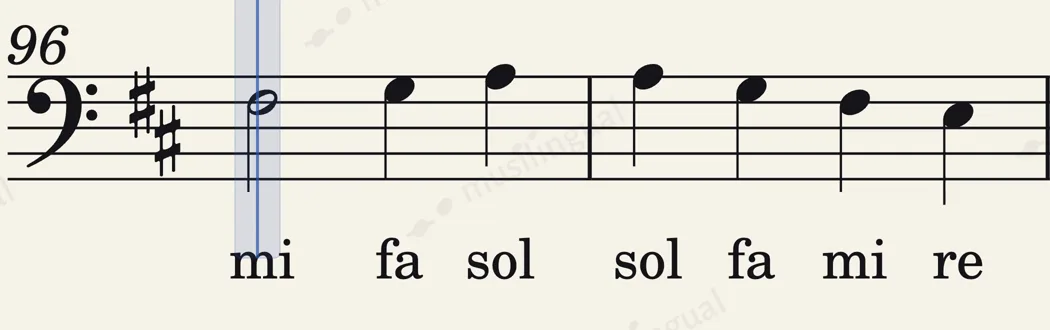
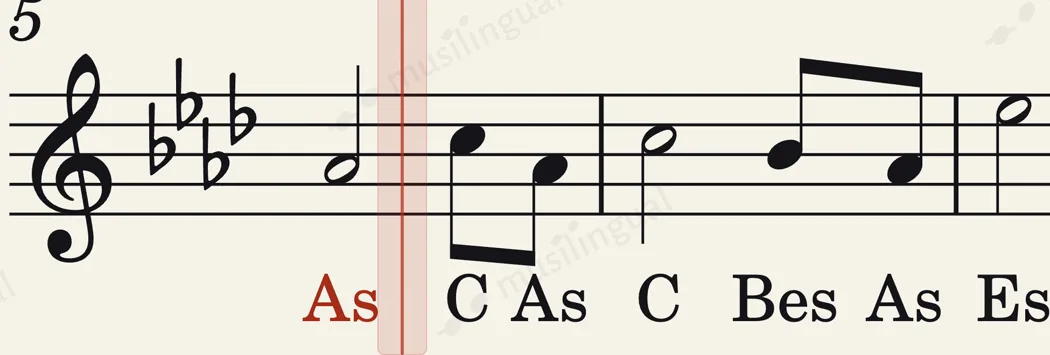
Solfège comes first in the program, because it is what your ear hears: pull towards home. Letter names come once that is solid, and they turn what you hear into what you play.
Melodies you know, sung note by note.
600,000+plays on TikTok
Classical and pop, engraved and sung in solfège and in letter names. The videos show what hearing every note is like. The program gets you there.


Questions
Is it free?
Yes. Everyone who joins now gets free early access. Your number is your place on the list, counted in the order people joined, and the bar shows how many of the open spots are taken.
When does it open?
We are building it now. Leave your email and you get your number straight away. We email you the day early access opens, and nothing in between.
Do I need to read music already?
No. The program starts by ear, with songs you already know, and teaches reading as you go. If you already read, the early stages go quickly and your number holds your free spot either way.
Which solfège: fixed do or movable do?
Movable do, with do-based minor. Do is always the home note of the key you are in, major or minor, so what you sing is what your ear feels: the pull towards home. In a minor key you sing do re me fa sol le te. Fixed do names the keys on a piano instead, and la-based minor moves home away from do; neither trains the ear the way this does.
Which letter names?
C D E F G A B. A sharp adds -is: Fis is F♯. A flat adds -es: Bes is B♭, and E♭ and A♭ are Es and As. One syllable a note, so every note can be sung, which is the whole point. B is B, never H.
Who is behind it?
Musilingual is made in Sydney, Australia, by a conservatorium-trained musician: the same person behind the videos at @musilingual.
Will you spam me?
No. One email now with your number, then one when early access opens. Every email has a one-click unsubscribe link, and your mail app shows its own unsubscribe button for it.
Get your free spot.
Your number now, your free early access when it opens. Nothing to pay.
Preview with a sample number
You’re in.
You are number 312. Free early access is yours.
- Done: Step 1: your spot is saved.
- Step 2: open the email with your number. It is on its way to your address.
Not there in a minute? Check Promotions or Spam.